





National Construction Contracts and Law Survey 2015
[edit] Referring to BIM
Only a third (33%) of respondents to new survey claim to directly refer to BIM in their contracts. This was a finding from the National Construction Contracts and Law Survey 2015, conducted by RIBA Enterprises’ National Building Specification (NBS) and published in November 2015.
With all centrally-funded projects requiring collaborative 3D BIM by 2016, this low figure suggests there wiil be an abrupt adoption and embedding of BIM on required projects when the deadline is reached.
Although the figure represents an increase compared to the 2012 survey in which only 10% made contractual reference, it should also be considered alongside a survey finding that half of respondents had worked on a public sector project in the last year.
In terms of collaboration, the survey found that 47% of people saw BIM as an enabler, whereas 9% did not, leaving 44% who were unsure, indicating that there is more the industry needs to do to demonstrate and communicate the collaborative benefits of BIM.
More positively, 58% of respondents said that a BIM model was recognised by their organisation as contractually binding in the same way as specifications or drawings; evidence perhaps of a growing industry acceptance of BIM.
Adrian Malleson, head of research, analysis and forecasting at the NBS said, “We can draw the conclusion that majority feel that a BIM does have a contractual standing. People believe that if a BIM is delivered to a client or another organisation that it is a legally binding model.
“In practice, when we ask people what they are actually doing, things are slightly different to people's perceptions. Two thirds of people are not referring to BIM in their contracts at all. So while people see a BIM as legally binding the status of the contracts is some way behind that. There is a bit of catching up to do on the contract side of things."
For Malleson, the percentage of people referring to BIM in contracts is not necessarily proportionate to the rise in BIM adoption. “I had expected the percentage to be higher, particularly given that half the people surveyed had worked on a public sector project in the past 12 months. Possibly one reason is that people are working in BIM environments, but are outputting in traditional forms?”
[edit] Disputes
Despite stronger construction output and a more buoyant market than at any point since the 2008 recession, the survey found that the number of disputes within the construction industry had remained unchanged in recent years.
In 2012, 90% of respondents thought the number of disputes in the construction industry had increased or stayed the same. The same figure was found in the 2015 survey.
Almost half of those who responded said that had had to deal with at least one dispute in the last year – with most disputes occurring between clients and main contractors (according to 76% of respondents) or between a main contractor and subcontractor (29%).
Read the NBS report on the survey here.
[edit] Related articles on Designing Buildings
Featured articles
Check out some of the best features and news from Designing Buildings as well as key stories from around the web.

Water sector faces a growing crisis that could slow the delivery of vital infrastructure.
Undervaluing our industrial past

Heritage value changes as taste for building styles changes.
Changing expectations around competence and compliance

New information sheet from CIAT.
Grenfell investigation files passed to CPS

Angela Rayner apologises on behalf of the British state.

Electrical contractors need to understand the practical implications.

The real barrier to getting more value from digital technology.

Your guide to The Construction Reset at UKCW Birmingham.

Accommodating the Victorian and Edwardian working woman. Book review.
Rethinking passive fire protection in design

PFP demands the same level of design rigour as structure or services.
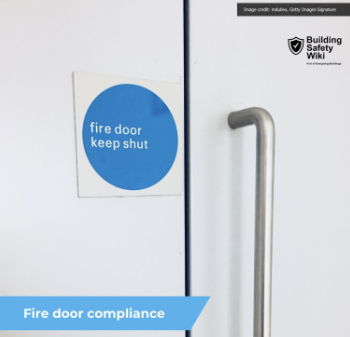
38% of Gen Zs feel safe when a fire door is wedged open.
Stunning images from around the world
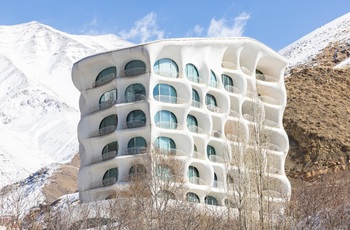
Shortlist for CIOB’s Art of Building photography competition.
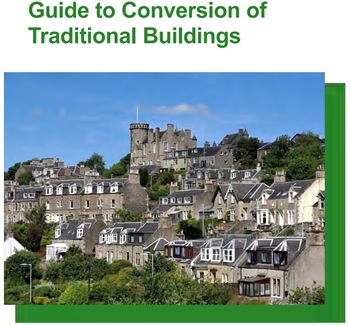
Guidance for conversion of traditional pre-1919 stone buildings.